
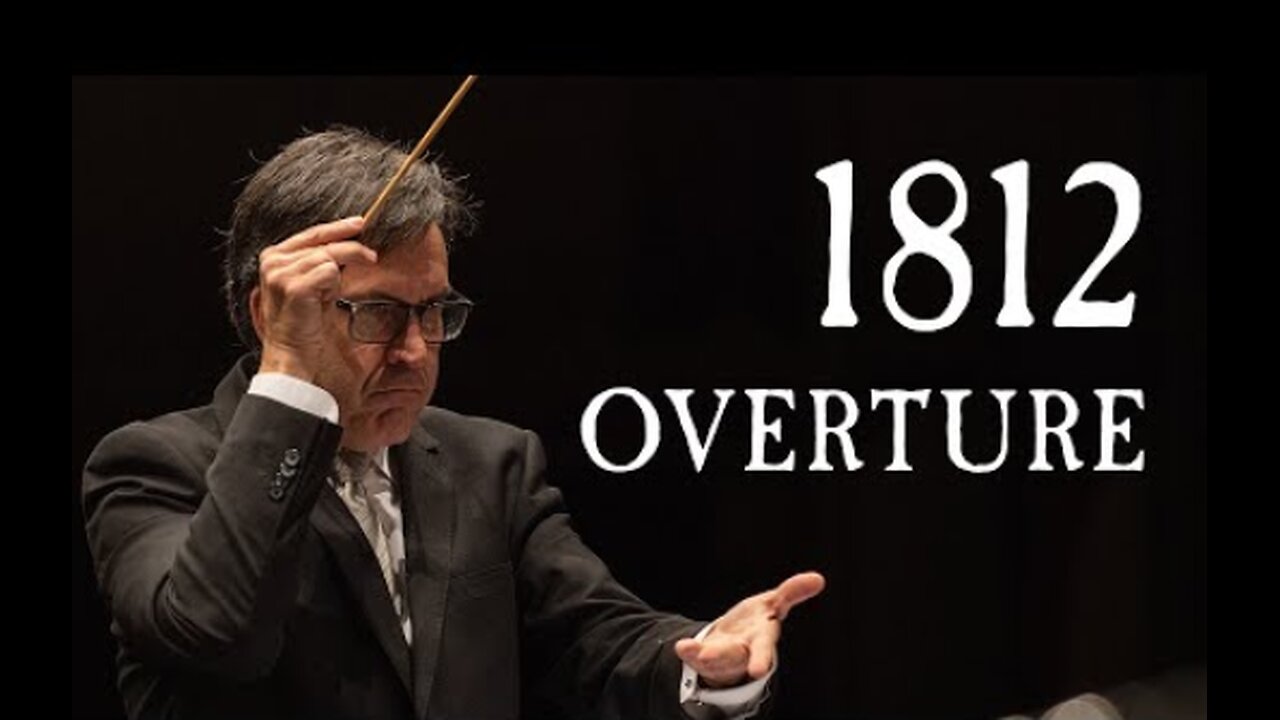
Tchaikovsky - 1812 OVERTURE (full with Cannons, Fireworks and Bell Tower)
Musical Society of Algemesí (Spain)
252K subscribers
00:00 Intro
12:30 Cannons start to play
13:31 God Save the Tsar (churchbell & goosebumps)
The Year 1812 Solemn Overture, Op. 49, popularly known as the 1812 Overture, is a concert overture in E♭ major written in 1880 by Russian composer Pyotr Ilyich Tchaikovsky to commemorate the successful Russian defense against Napoleon's invading Grande Armée in 1812.
In 1974, the Boston Pops added cannons, church bells and fireworks to draw crowds to their Independence Day concert. It was so successful that the inclusion of the "1812 Overture" became a staple.
Banda Simfònica d'Algemesí, at the concert of "Nit del Retorn" celebrated on September 6th 2016 at Plaça Major d'Algemesí.
Conductor: Alberto Ferrer i Martínez
Lefties in ‘meltdown’ over Donald Trump’s ‘epic’ political comeback
Gutfeld! 11 6 24 FULL END SHOW FOX BREAKING NEWS TRUMP November 6, 2024
A.I. Artificial Intelligence (2001) Part 1
Watch the complete film at josephwouk.locals(dot)com.
Anyone who missed this Speilberg film made 24 years ago MUST see this film which is much more relevant now than it was then. - JW
David, an artificial kid which is the first to have real feelings, especially a never-ending love for his "mother", Monica. Monica is the woman who adopted him as a substitute for her real son, who remains in cryo-stasis, stricken by an incurable disease. David is living happily with Monica and her husband, but when their real son returns home after a cure is discovered, his life changes dramatically.
10/10
Can't re-watch it again
I was 13-14 when I watched this movie. It's a long movie if I recall it correctly. I was so moved by it's theme, so I watched it all. I had strong feelings of sadness and sympathy towards little robot David that wanted to be a real child and to have a mom to love him. And that little bear ... I cried during some scenes. I don't ...


Today’s Jewish birthday: Herman Wouk
https://www.sdjewishworld.com/.../todays-jewish-birthday.../
The Living Years ( Cover )
I sent this video of Mike and the Mechanics song to my father, Herman Wouk's 102nd birthday.