
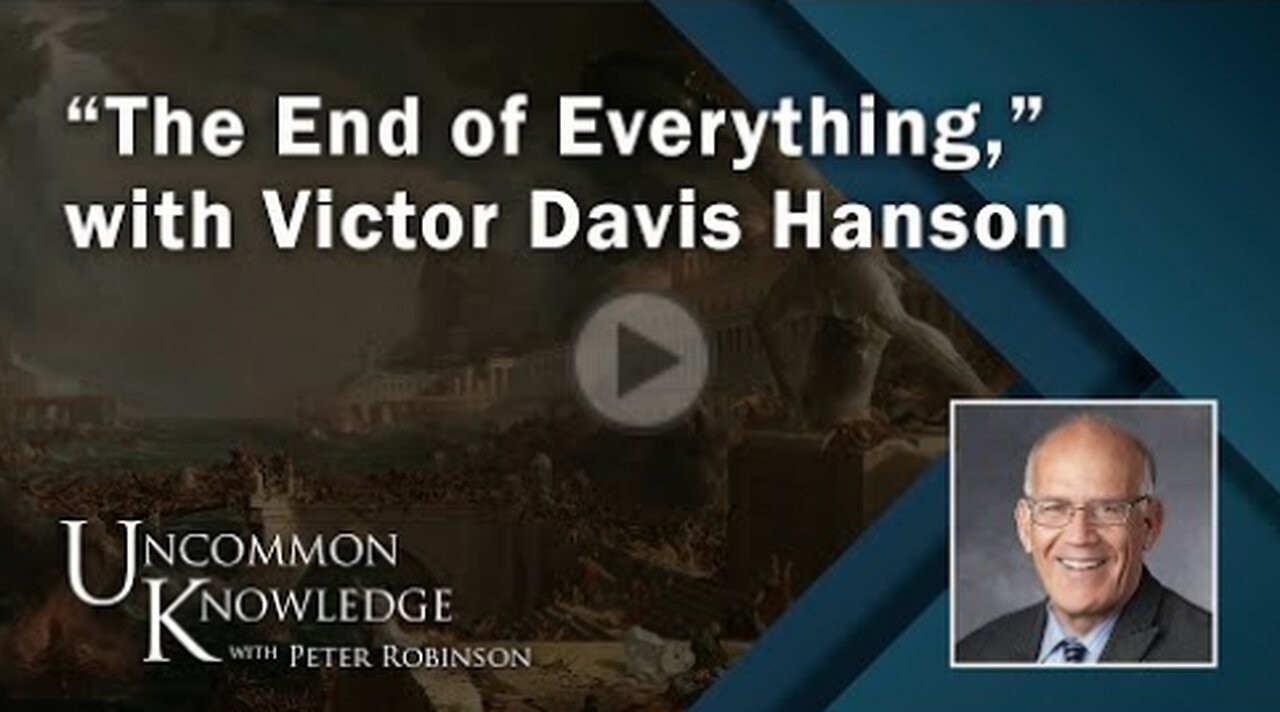
“The End of Everything,” with Victor Davis Hanson | Uncommon Knowledge
Hoover Institution
Classicist Victor Davis Hanson is the Martin and Illie Anderson Senior Fellow at the Hoover Institution and the author of hundreds of articles, book reviews, and newspaper editorials on Greek, agrarian, and military history and essays on contemporary culture. He has written or edited twenty-four books, the latest of which is The End of Everything: How Wars Descend into Annihilation. The book—and this conversation—charts how and why some societies choose to utterly destroy their foes and warns that similar wars of obliteration are possible in our time. Hanson provides a warning to current societies not to repeat the mistakes of the past.
Lefties in ‘meltdown’ over Donald Trump’s ‘epic’ political comeback
Gutfeld! 11 6 24 FULL END SHOW FOX BREAKING NEWS TRUMP November 6, 2024
A.I. Artificial Intelligence (2001) Part 1
Watch the complete film at josephwouk.locals(dot)com.
Anyone who missed this Speilberg film made 24 years ago MUST see this film which is much more relevant now than it was then. - JW
David, an artificial kid which is the first to have real feelings, especially a never-ending love for his "mother", Monica. Monica is the woman who adopted him as a substitute for her real son, who remains in cryo-stasis, stricken by an incurable disease. David is living happily with Monica and her husband, but when their real son returns home after a cure is discovered, his life changes dramatically.
10/10
Can't re-watch it again
I was 13-14 when I watched this movie. It's a long movie if I recall it correctly. I was so moved by it's theme, so I watched it all. I had strong feelings of sadness and sympathy towards little robot David that wanted to be a real child and to have a mom to love him. And that little bear ... I cried during some scenes. I don't ...

Today’s Jewish birthday: Herman Wouk
https://www.sdjewishworld.com/.../todays-jewish-birthday.../
The Living Years ( Cover )
I sent this video of Mike and the Mechanics song to my father, Herman Wouk's 102nd birthday.