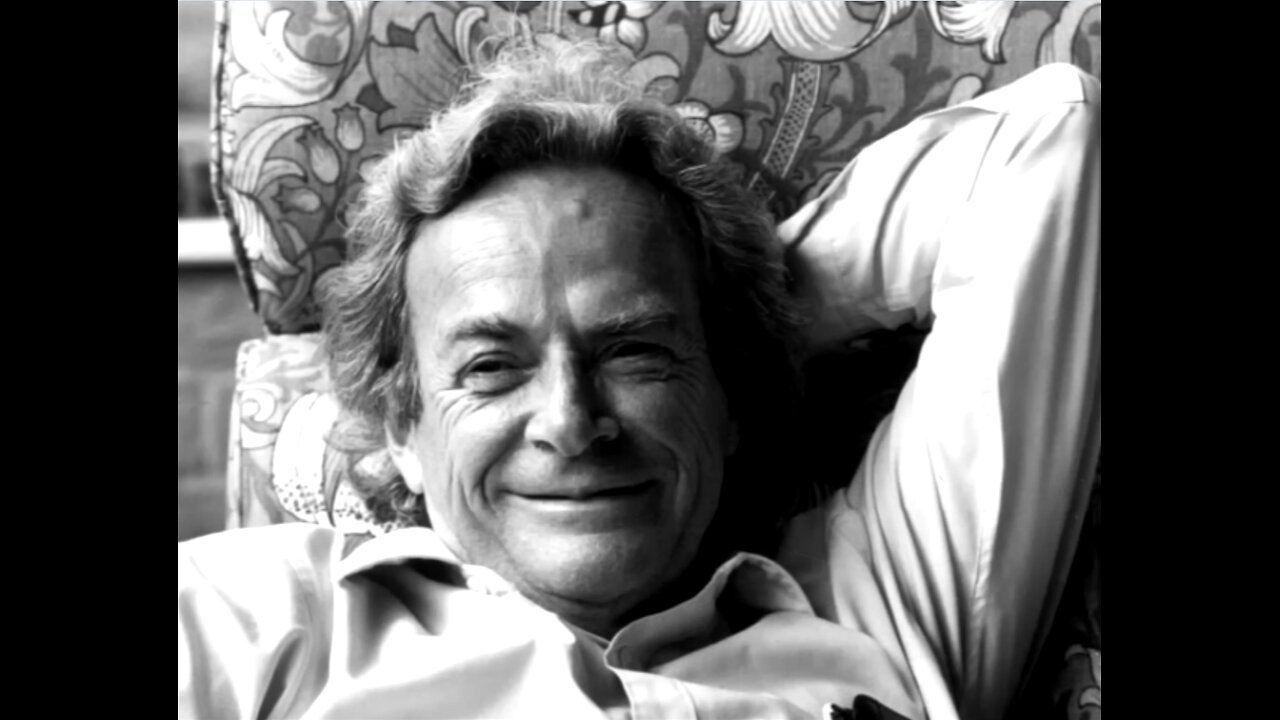

"More years ago than I care to reckon up, I met Richard Feynman." So begins THE LANGUAGE GOD TALKS, Herman Wouk's gem on navigating the divide between science and religion. In one rich, compact volume, Wouk draws on stories from his life as well as on key events from the 20th century to address the eternal questions of why we are here, what purpose faith serves, and how scientific fact fits into the picture. He relates wonderful conversations he's had with scientists such as Feynman, Murray Gell-Mann, Freeman Dyson, and Steven Weinberg, and brings to life such pivotal moments as the 1969 moon landing and the Challenger disaster. Brilliantly written, THE LANGUAGE GOD TALKS is a scintillating and lively investigation and a worthy addition to the literature.
Lefties in ‘meltdown’ over Donald Trump’s ‘epic’ political comeback
Gutfeld! 11 6 24 FULL END SHOW FOX BREAKING NEWS TRUMP November 6, 2024
A.I. Artificial Intelligence (2001) Part 1
Watch the complete film at josephwouk.locals(dot)com.
Anyone who missed this Speilberg film made 24 years ago MUST see this film which is much more relevant now than it was then. - JW
David, an artificial kid which is the first to have real feelings, especially a never-ending love for his "mother", Monica. Monica is the woman who adopted him as a substitute for her real son, who remains in cryo-stasis, stricken by an incurable disease. David is living happily with Monica and her husband, but when their real son returns home after a cure is discovered, his life changes dramatically.
10/10
Can't re-watch it again
I was 13-14 when I watched this movie. It's a long movie if I recall it correctly. I was so moved by it's theme, so I watched it all. I had strong feelings of sadness and sympathy towards little robot David that wanted to be a real child and to have a mom to love him. And that little bear ... I cried during some scenes. I don't ...


Today’s Jewish birthday: Herman Wouk
https://www.sdjewishworld.com/.../todays-jewish-birthday.../
The Living Years ( Cover )
I sent this video of Mike and the Mechanics song to my father, Herman Wouk's 102nd birthday.